Guichon Creek Is a Critical Water Source
This creek supports livestock, the Lower Nicola Indian Band, rural farms, recreation, and diverse animal populations including wild horses — and must be properly assessed before any industrial development proceeds.
Reality vs. Project Claims
On-the-ground use tells a different story than how this water source may be classified in project materials.
Project Classification
Project materials suggest Guichon Creek may be intermittent or seasonal — implying it does not flow year-round and may be less significant for environmental planning purposes.
Local Observation
Ranchers, the Lower Nicola Indian Band, rural farms, and local residents who have worked this land for generations report that Guichon Creek is reliably present and actively used by livestock, recreation, and diverse animal populations including wild horses as a consistent water source.
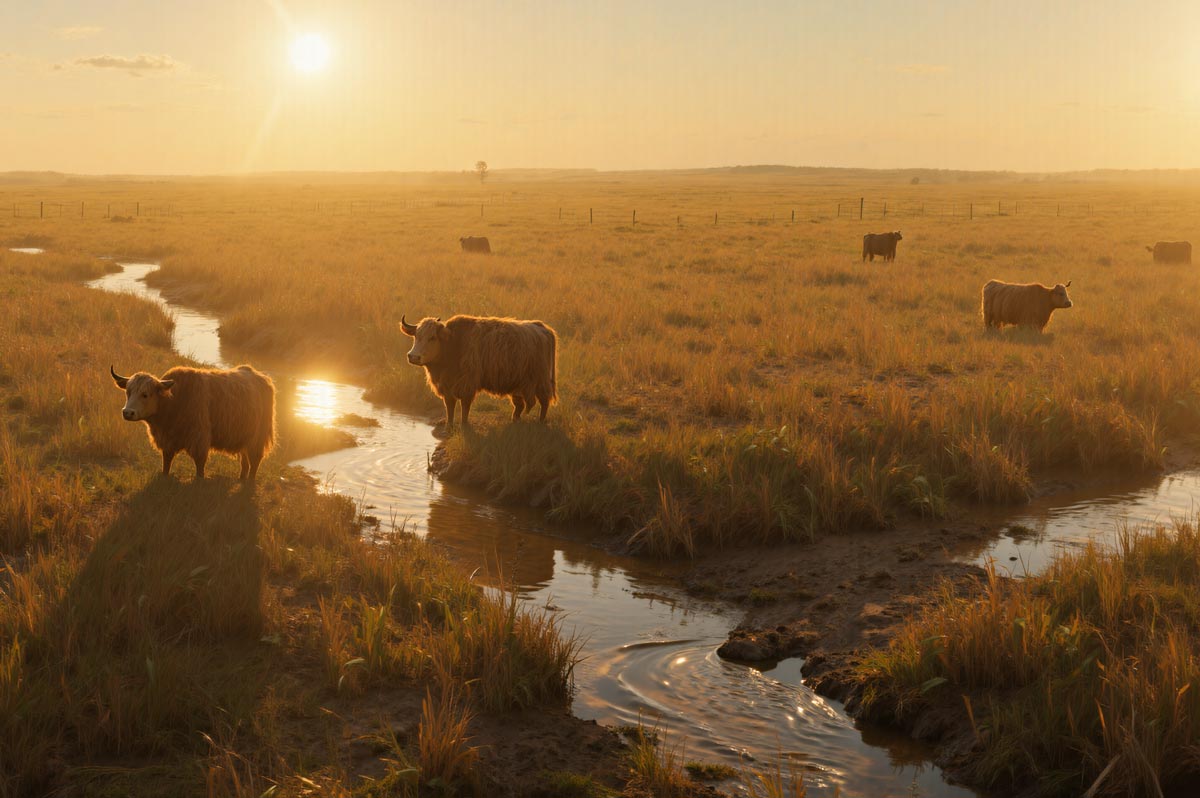
Livestock Dependency
Guichon Creek is not an abstract environmental feature — it is essential to working ranches, the Lower Nicola Indian Band, rural farms, recreation, and diverse animal populations including wild horses.
Direct Drinking Source
Cattle rely on Guichon Creek for water access during grazing rotations on Crown range. No creek means no viable grazing.
Supports Grazing Operations
Water availability determines which pastures can be used and when. Disrupting the creek disrupts the entire grazing system.
Essential to Ranch Viability
Without reliable water on Crown range, ranchers face increased costs, reduced capacity, and potential loss of tenure access.
Risk Pathways
At a 1,000-acre scale, even low-probability events can impact downstream water sources.
Sediment Runoff from Land Disturbance
Grading and construction across ~1,000 acres increases erosion potential, with sediment reaching downstream waterways during rainfall events.
Fuel & Equipment Spill Risk
Heavy machinery during construction and maintenance introduces the possibility of fuel, hydraulic fluid, or lubricant releases near drainage channels.
Drainage Pattern Changes
Panel arrays, roads, and compacted surfaces alter natural water flow across the landscape, potentially redirecting or concentrating runoff.
Fire-Related Runoff
Post-fire runoff in areas with industrial materials may carry contaminants into waterways — a concern in this high-risk wildfire zone.
Why Classification Matters
If a water source is treated as intermittent when it is actively used, its importance may be underestimated in environmental planning. Accurate classification of Guichon Creek is essential to ensuring adequate protection for livestock, downstream users, and the broader watershed.
What We're Asking
Reasonable steps to protect water sources before industrial development proceeds.
Reassess Guichon Creek's classification based on actual, observed flow conditions — not desktop estimates.
Conduct field-validated hydrological studies during all seasons to confirm water presence and reliability.
Formally recognize reliance on Guichon Creek by livestock, the Lower Nicola Indian Band, rural farms, recreation, and diverse animal populations including wild horses as part of the Environmental Assessment.
Strengthen water protection measures proportional to the ~1,000-acre scale of the proposed facility.